

Since February 2025, the United States has been through its biggest change in trade policy in decades. If it has been hard to follow, you are not alone.
Tariffs were announced, raised, paused, collected, struck down by the Supreme Court, and are now being paid back. This article skips the opinions and looks only at the numbers the government itself publishes: five charts, each with one plain-English takeaway. What they mean for your business is up to you.
If you want a refresher on how tariffs work first, start with Tariffs 101.
The Short Timeline
- February and March 2025: tariffs on goods from China, Canada and Mexico.
- April 2025: a 10% tariff on almost everything imported, with higher rates for many countries later that summer.
- February 2026: the Supreme Court rules that the law used for these "emergency" tariffs never allowed them.
- May 2026 onward: the government starts paying the money back.
- Still in place: tariffs on steel, aluminum, cars and some other goods were created under different laws and were not part of the ruling.
1. What Things Cost at the Store
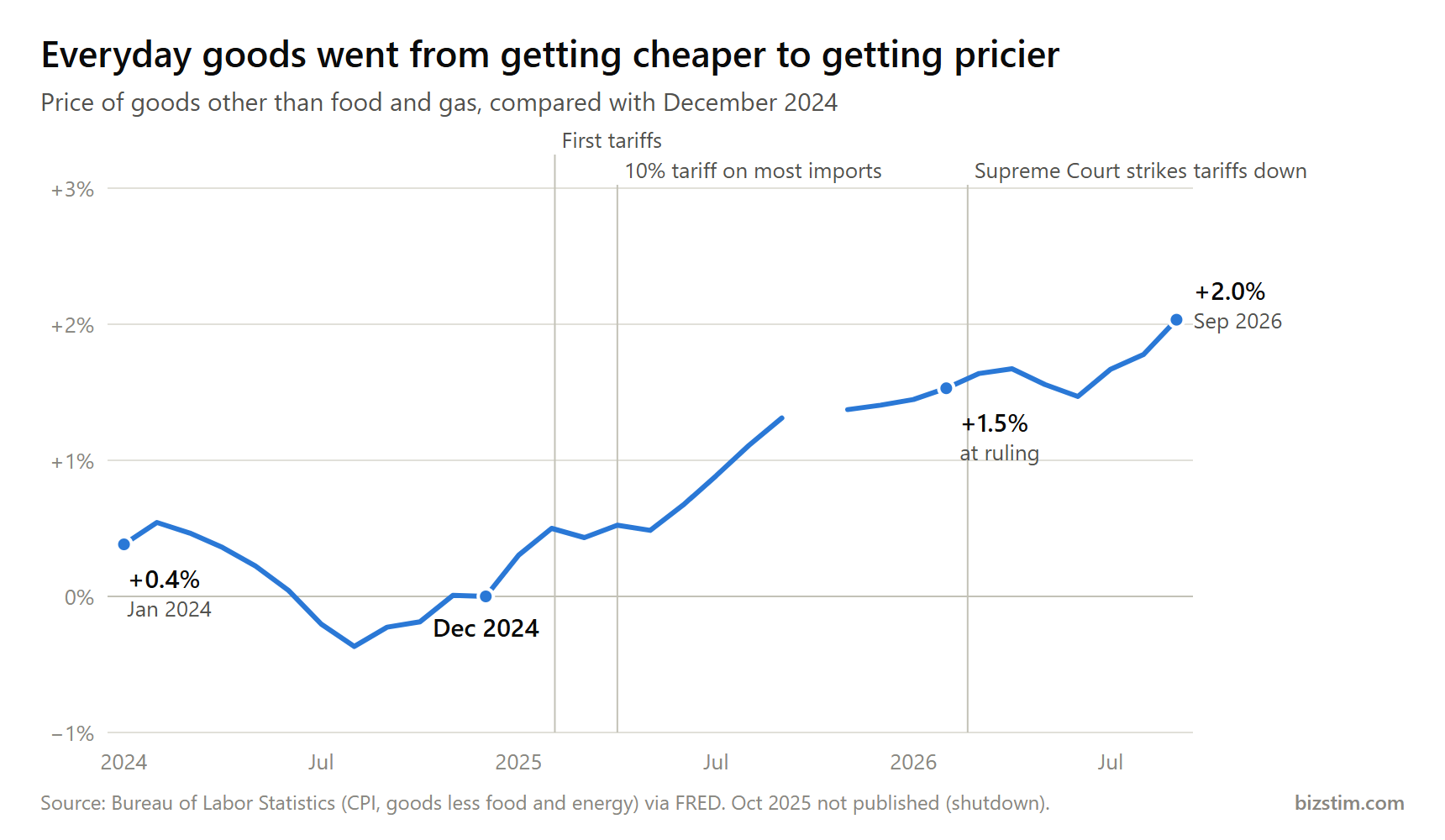
In 2024, everyday goods such as cars, clothing, furniture and appliances were slowly getting cheaper. Over the year their prices fell 0.7%.
Once the tariffs arrived, that reversed. By September 2026, the same goods cost 2% more than at the end of 2024. Over the same months, the prices foreign companies charged at the border barely moved, so the increase happened on this side of the border.
After the Supreme Court struck the emergency tariffs down in February 2026, prices did not fall back. They rose another 0.5%.
Takeaway: goods went from getting cheaper to getting more expensive, and they have stayed that way. Curious how these prices are measured? See Understanding the Consumer Price Index.

2. Your Customers' Paychecks vs. Prices
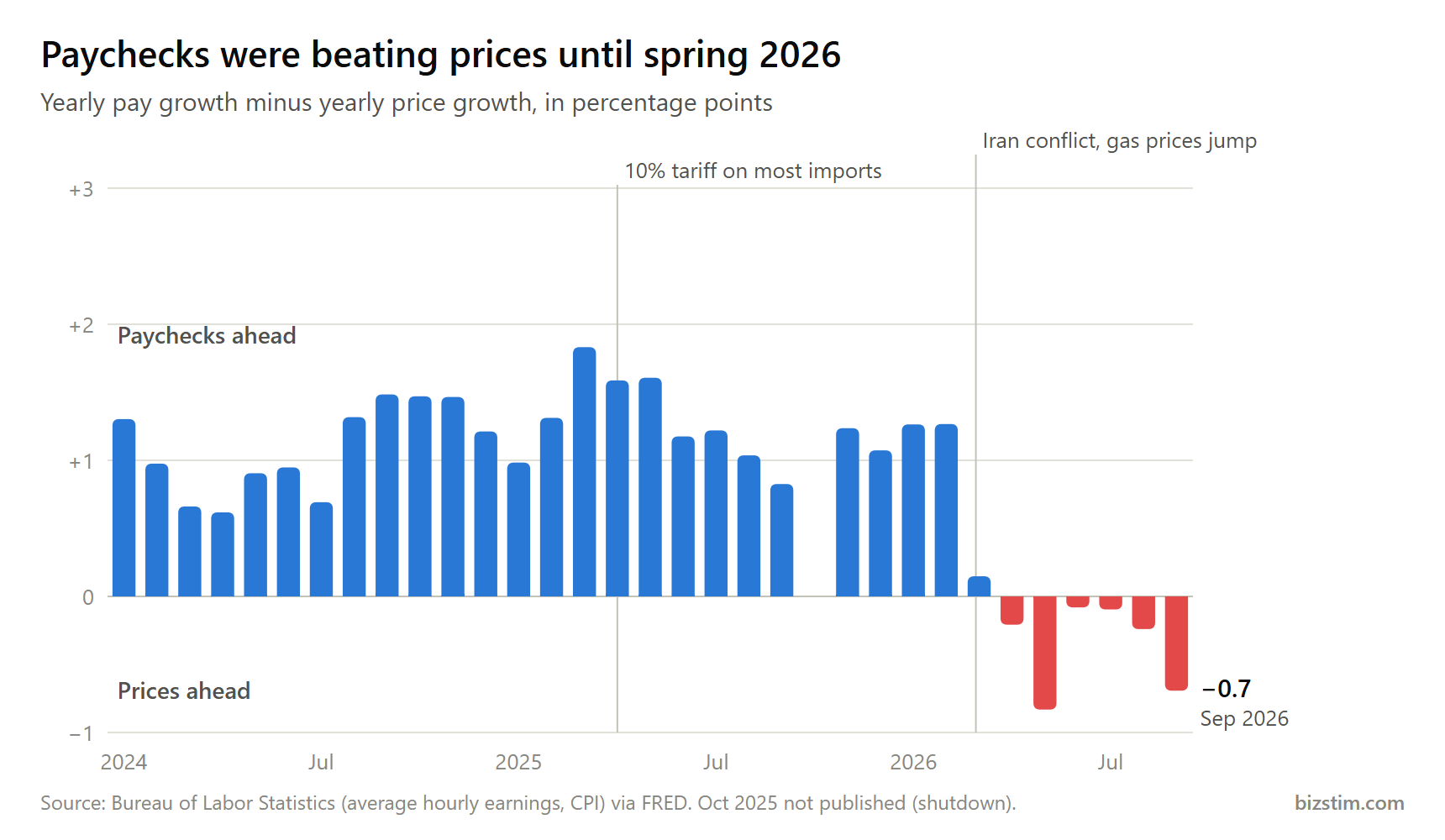
For most of 2025, pay rose faster than prices, by 1 to 2 percentage points a year. Your customers were slowly getting ahead.
That changed in April 2026, when gas prices jumped after the conflict with Iran began. Since then prices have risen faster than pay. In September, pay was up 3.0% from a year earlier and prices were up 3.7%.
Takeaway: for the past six months, the average paycheck has bought less than it did a year earlier.

3. How Your Customers Feel
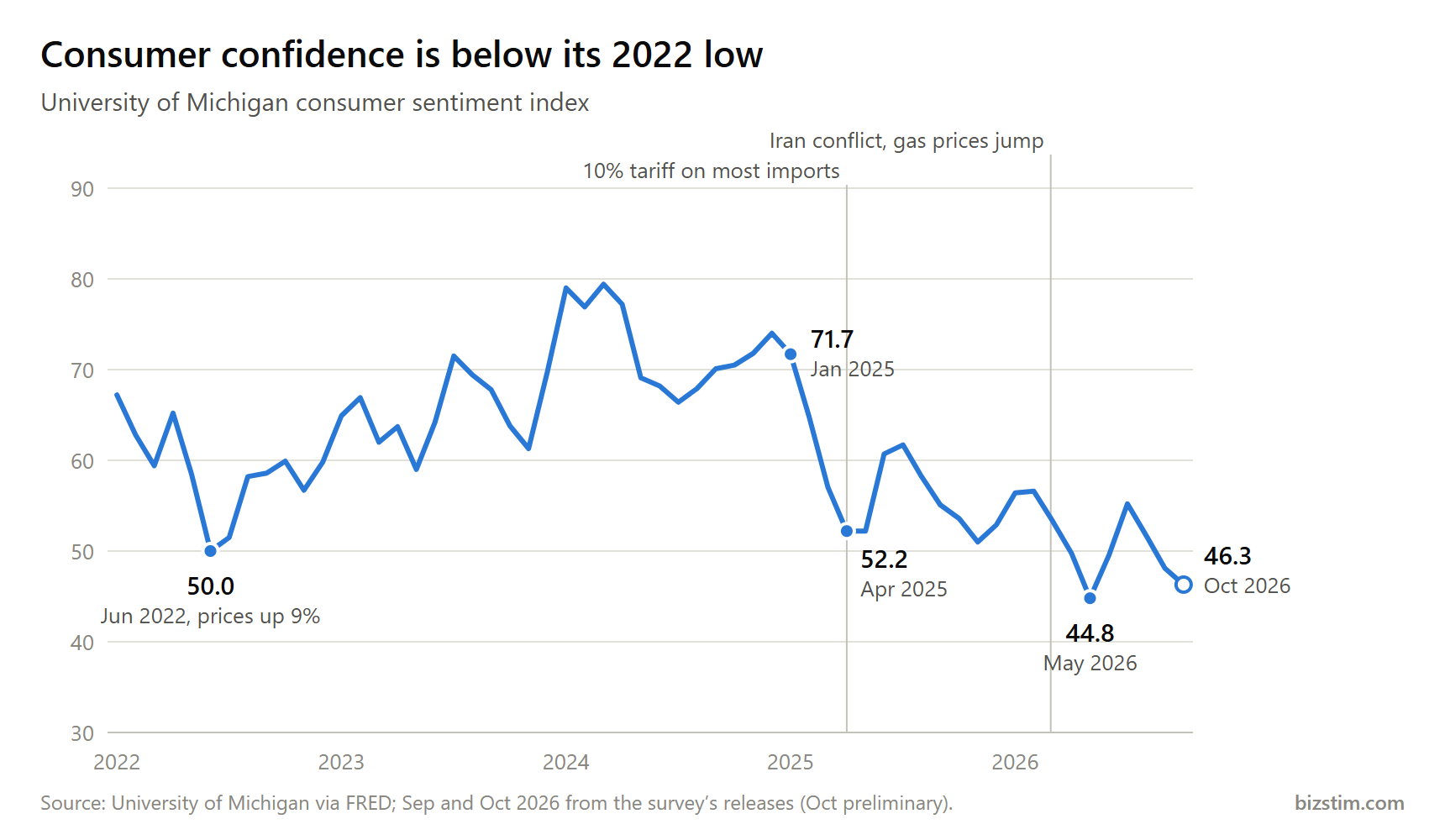
The University of Michigan has asked Americans how they feel about the economy every month for decades. In January 2025 the reading was 71.7. By April 2025, the month the 10% tariff on most imports was announced, it had dropped to 52.2. Paychecks were still beating prices at the time.
It fell further in 2026 as gas prices climbed, reaching 44.8 in May. The early October reading was 46.3. For comparison, in June 2022, when prices were rising 9% a year, it was 50.0.
Takeaway: confidence fell before paychecks did, and it is now lower than at the peak of the 2022 price surge. Small business owners have been feeling it too.

4. Where the Tariff Money Went
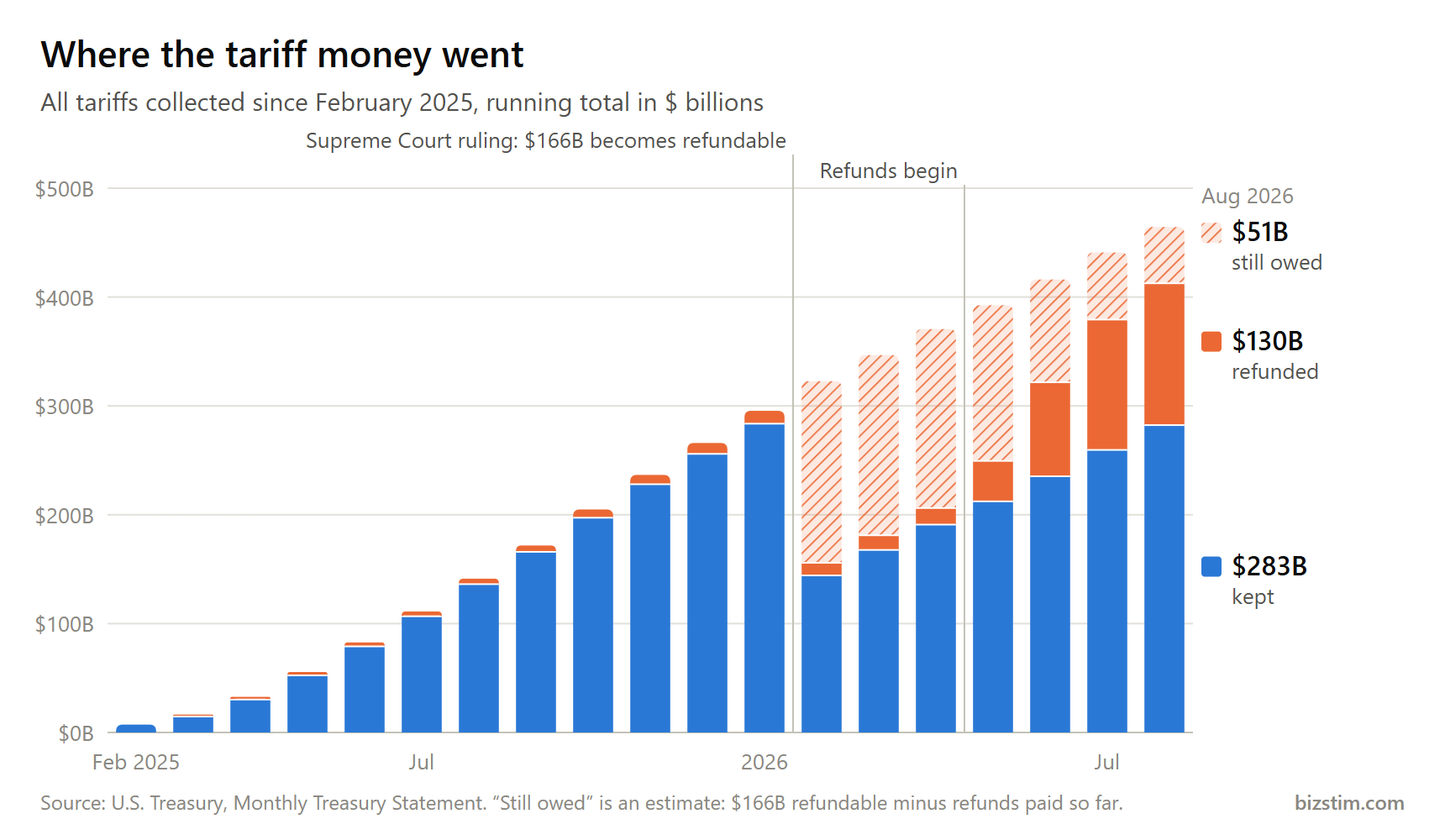
Before 2025, the government collected about $7 billion a month in tariffs. By 2026 it was about $24 billion a month. Since February 2025 the total comes to about $464 billion.
After the Supreme Court ruling, about $166 billion of that became refundable. To put that in perspective, it works out to about $1,230 for every household in the country. Refunds began in May 2026, and by the end of August about $115 billion had been paid back, including interest. In June and July, the government paid out more in tariff refunds than it took in from tariffs, according to the U.S. Treasury's monthly statement.
The refund goes to the company listed as the importer on the customs paperwork. Shoppers who paid higher prices do not get anything back, and neither does a business that bought imported goods from a supplier, unless its contract says otherwise. We looked at the impact of tariffs on Americans in an earlier article.
Takeaway: of the roughly $464 billion collected, about $283 billion stays with the government once the remaining refunds are paid. The refunds go to importers, not to shoppers.
5. Did Factories Come Home?
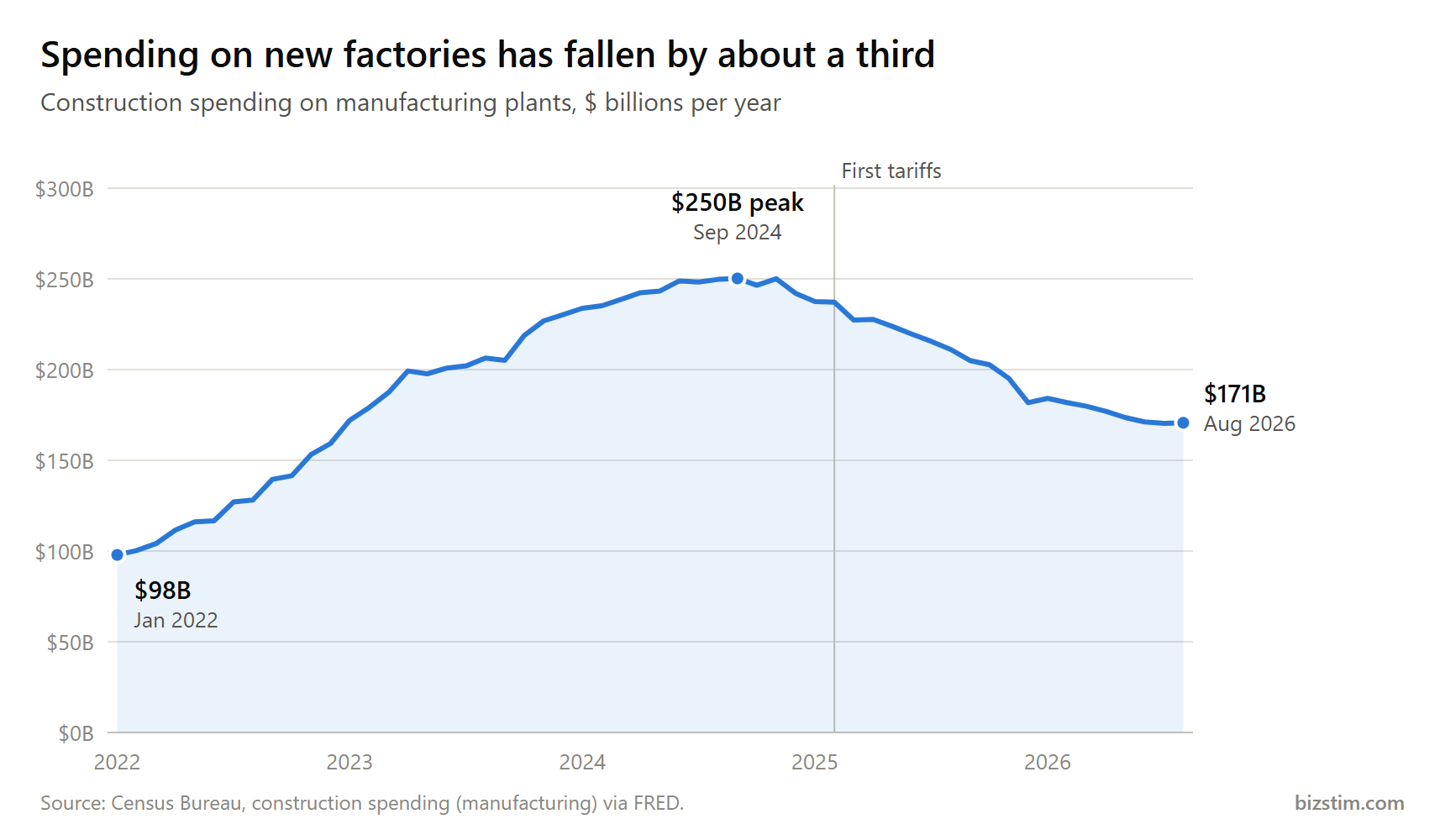
One goal of the tariffs was to bring manufacturing back to the United States. A new factory takes years to build, so the earliest sign is construction spending: money being spent right now on new plants.
That number peaked at $250 billion a year in September 2024 and has fallen almost every month since, to $171 billion in August 2026, down about a third.
Factory jobs fell by 113,000 in 2025 and have regained 72,000 so far in 2026. Factory output is up 3.4% since the end of 2024, which means existing plants are producing more.
Takeaway: existing factories are busier, but fewer new ones are being built. Building takes time, so this chapter is not finished.
What It Means for Your Business
- If your business imported goods directly and paid the emergency tariffs, you may be owed a refund. Claims go through U.S. Customs and Border Protection's online refund process, usually with help from your customs broker. For small amounts, the paperwork can cost more than the refund.
- If you bought imported goods from a supplier, the refund goes to them. Check your contract.
- Your customers' wallets: paychecks are currently not keeping up with prices, and confidence is close to its lowest point in years. That can affect how people spend on services, including yours.
Sources: Bureau of Labor Statistics, Census Bureau, University of Michigan, Federal Reserve Bank of St. Louis and the U.S. Treasury. Data through September 2026.



There are no comments yet. Be the first to leave one.