
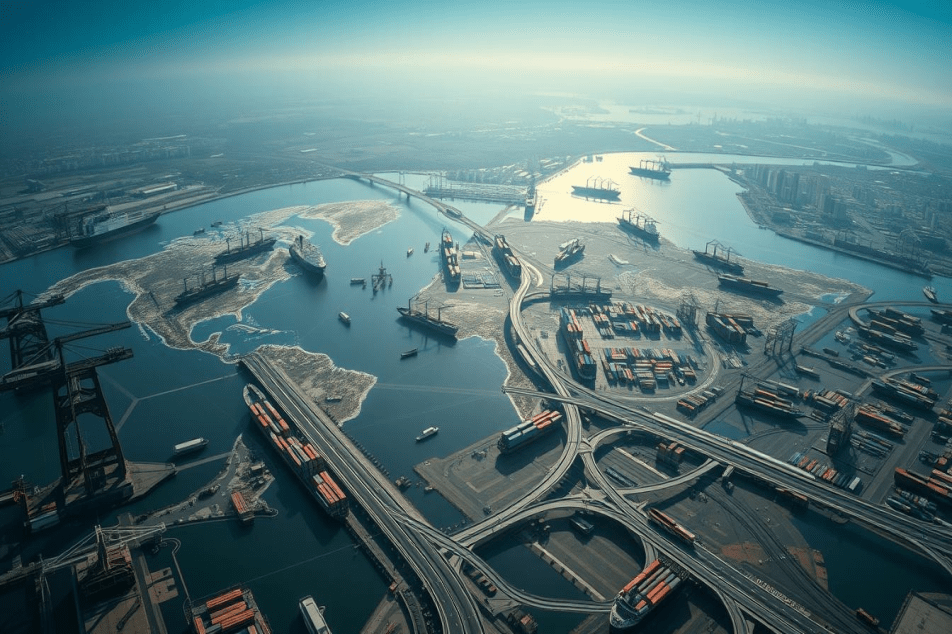
Trade wars have greatly affected economies and the relationships between countries A trade war happens when countries put tariffs or quotas on each other's goods. This usually happens because of unfair trade practices.
The Smoot-Hawley Tariff Act of 1930 and the US-China trade war are key examples. They have changed how global trade works. Knowing why and how these conflicts affect trade is important.
We will look at the big role trade wars have played in history. We'll see how they've changed global trade and economies. And we'll understand their lasting impact.
Defining Trade Wars: Economic Conflicts Between Nations

Trade wars are economic fights between countries. They often start because of protectionist policies and economic nationalism. These conflicts involve tariffs, quotas, and other barriers, affecting global trade and stability.
What Constitutes a Trade War
A trade war happens when countries put up trade barriers in response to others. This back-and-forth can cause big economic problems. It can raise prices, hurt jobs, and harm the economy as a whole.
The Role of Economic Nationalism
Economic nationalism is key in starting and making trade wars worse. Governments use tariffs and quotas to help their own industries. This can hurt international cooperation and free trade.
Significance in Global Economic History
Trade wars have shaped global trade and economic policies for a long time. Knowing why they happen and how they affect the economy is vital. It helps us understand their role in global economic growth and stability.

The Historical Roots of Trade Conflicts

Trade disputes have been around as long as trade itself. They go back to ancient times. Knowing this history helps us understand today's trade wars and their big effects.
Ancient and Medieval Trade Disputes
Merchants and traders fought over valuable goods in ancient times. The Silk Road, a key trade route, saw many fights over tariffs and rights. In the Middle Ages, European trade guilds argued with local leaders over trade benefits.
Colonial Era Trade Restrictions
In the colonial era, European powers put strict trade rules on their colonies. This led to many conflicts. For example, the British Navigation Acts limited colonial trade, causing big economic problems. These issues helped lead to the American Revolution.
Trade as an Extension of Political Power
Trade has long been tied to political power. Nations use trade rules and tariffs to get what they want. This shows how closely economics and politics are connected.

The Evolution of Trade Protectionism

The story of trade protectionism is complex. It's shaped by economic theories and world events. This history shows how views on global trade and government roles have changed over time.
Mercantilism and Early Trade Barriers
Mercantilism started in the 16th century. It was about states controlling the economy to get rich, often by having trade surpluses. Countries used tariffs and other barriers to protect their industries.
The Industrial Revolution and Changing Trade Patterns
The Industrial Revolution changed how trade worked. As factories grew, countries started to protect their new industries. This led to more tariffs and other protectionist actions.
The Rise and Fall of Free Trade Ideologies
In the 19th century, free trade became popular. People thought open trade would make everyone richer. But, by the 20th century, protectionism came back. Countries wanted to shield their economies during tough times.

Key Weapons in Trade Wars: Tariffs, Quotas, and Sanctions

The tools used in trade wars include tariffs, quotas, and sanctions. Each has its own economic effects. Countries use these to protect their industries, retaliate, or achieve economic goals.
Tariffs as Revenue and Protection Tools
Tariffs have long been used to raise government revenue and protect domestic industries. By taxing imported goods, tariffs make them more expensive for consumers. This helps domestic products compete better.
Import Quotas and Their Economic Effects
Import quotas limit the amount of goods that can be brought into a country. This affects supply chains and prices. Quotas can cause shortages and higher prices for consumers. But they help domestic producers by reducing competition.
To understand how import quotas impact production we use the Producer Price Index or PPI. PPI shows the average change in selling prices for domestic producers. It's a key economic indicator that tracks inflation at the wholesale level.
Non-Tariff Barriers and Regulatory Obstacles
Modern trade wars often involve non-tariff barriers like regulatory obstacles. These can include technical standards and health and safety rules. They limit imports without using tariffs or quotas.
Currency manipulation is a powerful tool in trade conflicts. By lowering their currency value, countries make their exports cheaper. This can give them an unfair trade advantage.
Technical standards can also be trade barriers if they favor domestic producers. They cover many areas, like product safety and environmental rules. These standards can limit imports significantly.
| Trade War Tool | Description | Economic Impact |
|---|---|---|
| Tariffs | Taxes on imported goods | Increased consumer prices, revenue for government |
| Quotas | Quantity limits on imports | Potential shortages, higher prices |
| Sanctions | Restrictions on trade with specific countries | Diplomatic tensions, economic losses |
The Smoot-Hawley Tariff: Deepening the Great Depression

The Smoot-Hawley Tariff of 1930 was a turning point in U.S. economic history. It raised tariffs on imports to high levels, starting a global trade war.
Political Context and Congressional Passage
The Smoot-Hawley Tariff was passed when the Great Depression was at its worst. Senators Reed Smoot and Representative Willis Hawley pushed for it. They wanted to protect American industries and farmers.
Global Retaliation and Trade Collapse
After the Smoot-Hawley Tariff was passed, countries quickly retaliated. This led to a big drop in global trade. Here's how it affected trade volumes:
| Year | Global Trade Volume | Change from Previous Year |
|---|---|---|
| 1929 | 100% | - |
| 1930 | 85% | -15% |
| 1931 | 65% | -20% |
Long-term Impact on American Trade Policy
The Smoot-Hawley Tariff changed U.S. trade policy for good. It led to the Reciprocal Tariff Act of 1934. This act moved towards more open trade policies.
The Smoot-Hawley Tariff Act shows the risks of protectionism in hard times. It teaches us the importance of working together on trade policies.
The Banana Wars and Colonial Trade Conflicts

The Banana Wars were a series of economic conflicts. They showed how trade, politics, and power are linked. These fights, mainly between the United States and European powers, focused on bananas. They had big effects on Latin American economies.
European Powers and Trade Dominance
European powers like Britain, France, and Spain ruled global trade for a long time. They controlled many areas in the Caribbean and Central America, where bananas grew. The United States wanted to grow its economic power and challenge their rule.
US-European Fruit Trade Disputes
The Banana Wars involved many trade fights between the US and European fruit companies. Tariffs, quotas, and other barriers were set up, affecting banana imports. These disputes showed deeper political tensions and rivalries.
Effects on Latin American Economies
The Banana Wars had big effects on Latin America's economies. Countries like Costa Rica, Honduras, and Guatemala, big banana producers, felt the impact. Their economies were tied too closely to bananas, making them vulnerable to market changes.
Post-War Trade Frameworks: GATT and WTO

After World War II, the world aimed to build a fair trade system. The General Agreement on Tariffs and Trade (GATT) was created in 1947. It was a key agreement to cut down tariffs and trade barriers.
Creating Rules-Based Trade Systems
GATT set up a way for countries to make trade deals and solve disputes. The World Trade Organization (WTO) took over in 1995. It covered more areas like services and intellectual property.
Dispute Resolution Mechanisms
The WTO brought a formal way to solve trade disputes. This has helped keep global trade stable.
Limitations in Preventing Modern Trade Conflicts
Even with these steps, new trade issues keep popping up. These include tariffs, subsidies, and rules that block trade. The WTO's role in solving these problems has been a challenge. It shows we need to keep working together.
The journey of GATT and WTO shows our ongoing effort for a fair global trade. It tackles economic conflicts and encourages cooperation.
Trade Wars and Their Historical Consequences Explored

Trade wars have had a big impact on the world economy. They have shaped how countries trade with each other. Often, these wars start because of economic nationalism and protectionist policies.
Patterns of Economic Nationalism Throughout History
Economic nationalism has shaped trade policies and conflicts for centuries. In the 17th and 18th centuries, Europe used mercantilist policies. In the 20th century, countries used tariffs and quotas to protect their industries.
Winners and Losers in Historical Trade Conflicts
Trade wars have had both winners and losers. Some countries have kept their industries safe, while others have lost a lot. For example, the Smoot-Hawley Tariff Act of 1930 was meant to help America but ended up making the Great Depression worse.
Long-Term Effects on Global Economic Development
Trade wars have lasting effects on the world economy. They can make things more expensive, reduce trade, and make the economy less efficient.
Trade wars also hurt innovation and technology sharing. Protectionist policies can block the flow of new ideas and technology. This slows down growth and innovation.
Trade wars can also change how wealth is spread out among countries. Protectionist policies can shift wealth to industries that are protected. This often hurts consumers and benefits the protected industries. To understand the impact of trade regulations, the Consumer Price Index (CPI) is a key economic tool to see how prices of goods and services change over time.
In summary, trade wars have had a big impact on the world economy. They have shaped global economic dynamics and influenced economic nationalism. Understanding these effects is key to creating trade policies that help everyone grow and work together.
The US-Japan Trade Tensions of the 1980s

In the 1980s, the US and Japan faced trade conflicts that changed their economic relationship. These issues mainly came from big trade gaps, mainly in cars and electronics.
Automotive and Electronics Sector Disputes
The US had a big trade deficit with Japan, mainly because of Japanese cars and electronics.
Key problems included:
- Many Japanese cars and trucks were sold in the US.
- Japanese companies were leaders in consumer electronics.
- There were worries about intellectual property and technology sharing.
Voluntary Export Restraints and Market Access
To deal with these trade gaps, the US and Japan agreed on voluntary export restraints (VERs). These limits on Japanese car exports aimed to cut the trade deficit and help the US car industry.
Resolution Mechanisms and Lasting Impact
The 1980s trade tensions led to new ways to solve disputes, like talks and trade agreements.
The lasting effects include:
- More cooperation on trade between the US and Japan.
- Changes in Japan's trade policies and practices.
- Examples for solving future trade disputes.
The 1980s US-Japan trade tensions show how complex international trade can be. They also highlight the importance of good ways to solve disputes.
The US-China Trade War: 21st Century Economic Rivalry

The trade war between the US and China started under the Trump administration. It has changed global trade a lot. It has affected many areas and led to talks about protectionism and economic nationalism.
Origins and Escalation Under the Trump Administration
In 2018, the Trump administration put tariffs on Chinese goods. They said it was because of unfair trade and theft of intellectual property. China then put tariffs on US products, starting a back-and-forth fight.
Key Sectors and Strategic Tariff Actions
The war hit many important areas like tech, farming, and making things. The US put tariffs on lots of Chinese goods, from electronics to clothes. China hit back with tariffs on US farm products and energy.
Technology Transfer and Intellectual Property Issues
A big part of the fight was about sharing technology and stealing ideas. The US said China made American companies share their tech and stole ideas through hacking and other ways.
The US put limits on Huawei, a big Chinese tech company. They said it was because of security worries and that it was influenced by the Chinese government. This was part of a bigger plan to stop Chinese companies from getting to advanced tech, like 5G.
The war also showed how important the chip supply chain is. The US and China are key players in making chips. The fight made people worry about problems in the supply chain and the chance of them splitting apart.
Economic and Social Impacts of Historical Trade Wars

Trade wars have had big effects on the economy and society. They have changed how much things cost, jobs, and how goods move around.
Consumer Price Effects and Welfare Losses
Trade wars often mean higher prices because of tariffs. For example, the US-China trade war made American consumers pay more for Chinese goods. This made people lose money because they had to spend more.
Employment Shifts and Wage Consequences
Trade wars can change jobs too. Industries hit by tariffs might cut jobs or move them overseas. This can make wages stay the same or even go down in some jobs.
Supply Chain Restructuring and Business Adaptation
Companies adjust to trade wars by changing their supply chains. They might find new suppliers or make things in different places. This can change how goods move around the world for a long time.
Political Polarization and Nationalism
Trade wars can also make people more divided and nationalistic. Policies that protect certain industries can make people feel more loyal to their country. This can hurt how countries work together globally.
In summary, trade wars have had big effects on prices, jobs, supply chains, and politics. Knowing these impacts helps us understand the full effects of trade wars.
Conclusion: Historical Lessons for Contemporary Trade Policy

Learning from past trade wars is key for today's trade policies. By looking at the economic history of these conflicts, we can better understand global trade. This helps policymakers avoid future trade wars.
Trade wars have shown that protectionist actions can harm more than just the involved countries. They affect the whole global trade scene. Learning from these events can lead to better trade policies. These policies aim for fair trade and less conflict.
The world's trade scene keeps changing. It's vital to use history to make trade policies that work for everyone. This way, countries can build a stable and prosperous global trade system.

There are no comments yet. Be the first to leave one.